
Too long, didn’t read
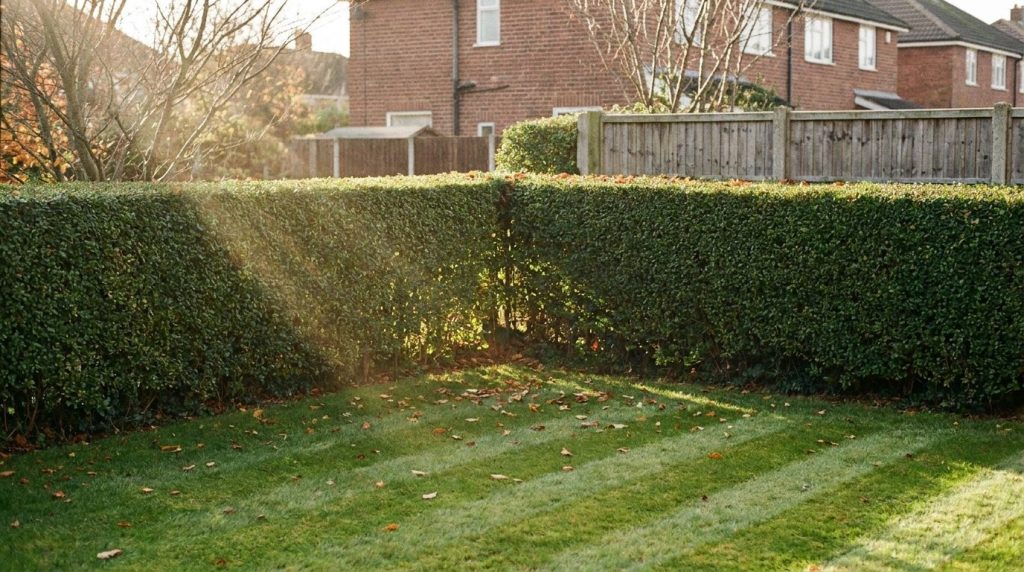
Hedge cutting season in the UK runs from September to the end of February, outside the main bird nesting season of 1 March to 31 August. September and October are the best weeks of the year for an end of season trim in North West gardens: the nesting risk has passed, the hedge still has time to seal its cuts, and it goes into winter tidy.
Need someone local to sort it? Call Sam and the crew on 07510 796808 or get a free quote.
There is a fortnight every September when the phone does not stop. The hedge that looked fine in May has put on two feet of growth, it is over the pavement, the neighbour has mentioned it twice, and everyone wants it done before the weather turns.
They are right to ring then. September and October genuinely are the best weeks for hedge trimming in this part of the country, and there are good reasons why that have nothing to do with our diary.
When Is Hedge Cutting Season In The UK?
September to the end of February. That is the safe window, and it exists because it sits outside the main bird nesting season, which runs from 1 March to 31 August.

Within that window, early autumn is the sweet spot. Here’s why September and October beat a January cut:
- The hedge can still respond. There is enough warmth left for cut ends to callus over before the frosts. Cut in deep winter and those wounds sit open.
- Growth has slowed. A September cut holds its shape through to spring. An August cut will have put on soft regrowth within weeks.
- The weather is workable. Cutting a wet hedge in a North West January is miserable, slower, and the clippings weigh three times as much.
- You get light back before winter. A hedge cut in October stops shading your borders and lawn through the darkest months.
When To Cut Hedges In The UK Without Breaking The Law
Worth being precise about this, because there is a lot of confusion and some of it is expensive.
It is not illegal to cut a garden hedge between March and August. What is illegal, under the Wildlife and Countryside Act 1981, is damaging or destroying an active bird’s nest while it is in use or being built. That is a criminal offence, and the responsibility sits with whoever does the cutting.

So the rule we work to, and the one any decent firm should work to, is this: between March and August, the hedge gets checked properly before a blade goes near it. If there is an active nest, that section waits. The RSPB guidance on hedge cutting and the law sets out what counts and what to look for.
Two extra things that catch people out locally:
- High Hedges rules. If a boundary hedge of mostly evergreen or semi-evergreen trees is over two metres and blocking a neighbour’s light, they can complain to the council. Both Wirral and Liverpool handle these, and it is a paid formal process nobody enjoys. Keeping on top of the annual cut avoids it entirely.
- Overhanging growth. You are entitled to cut back growth that crosses your boundary, up to the boundary line and no further. You are also technically obliged to offer the cuttings back, though almost nobody wants them.
Hedges got out of hand?
Trimmed, shaped, debris cleared, most jobs done in a day. Proper tools, tidy finish, and we check for nests before we start.
End Of Season Hedge Trimming: What To Cut In September And October
Not every hedge wants the same treatment, and the species in your garden decides the timing more than the calendar does.
Two techniques worth knowing whatever you have got. Cut the sides with a slight batter, meaning the base is wider than the top, so light reaches the bottom and the hedge stays furnished all the way down. And take the top off level with a string line rather than by eye. Every hedge cut by eye drifts, and after four years it drifts a long way.
Hedge Cutting Month By Month In The North West
National guidance tends to be written for the south. Our season runs a couple of weeks behind, growth carries on later into the autumn, and the wet arrives earlier. Here is how the year actually works on this side of the country.
The pattern most Wirral and Liverpool gardens settle into is one proper cut in September, plus a quick tidy in early summer if the hedge is a fast grower. That is enough to keep almost anything in shape indefinitely. It is the years when nothing happens at all that create the expensive jobs.
Hedge Trimming Cost And Hedge Cutting Prices Per Metre
Hedge work is usually priced one of two ways: by the metre for straightforward runs, or by the day for anything tall, awkward or badly overgrown.
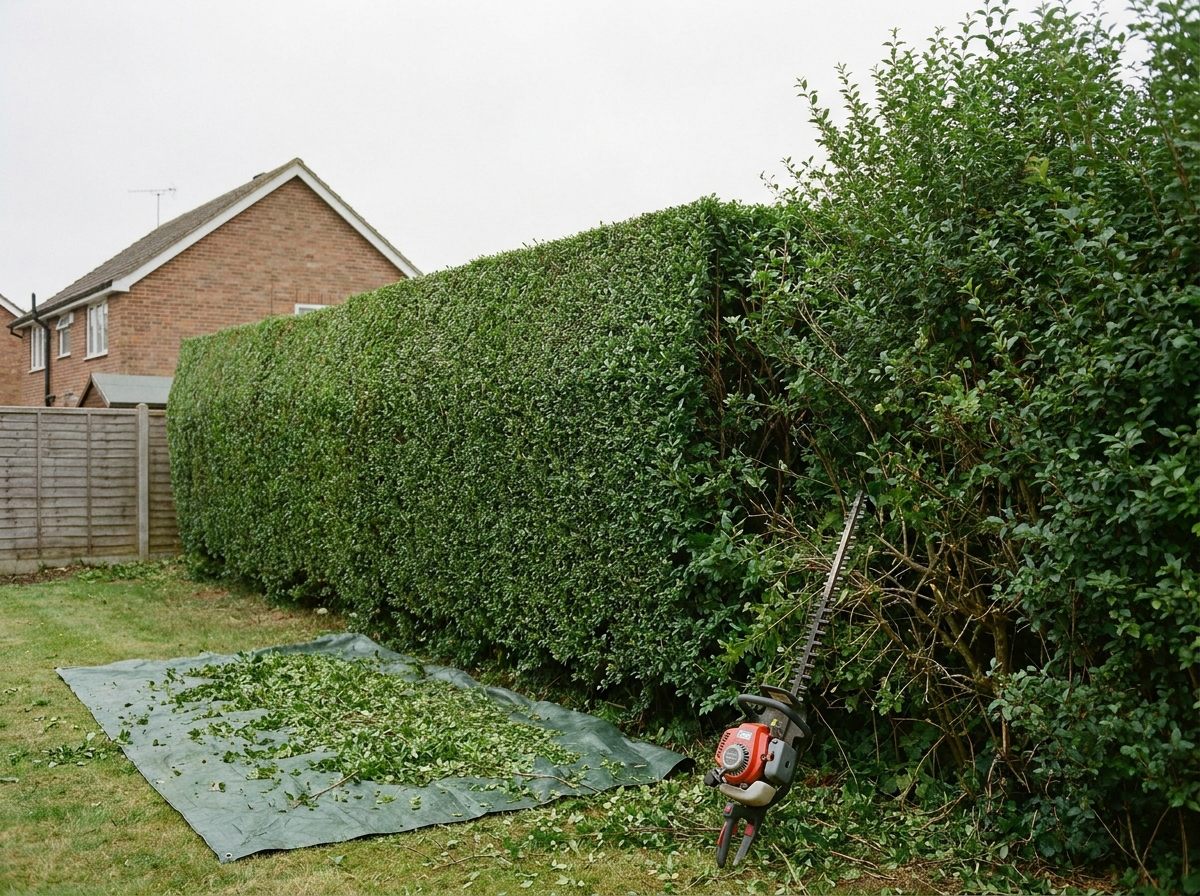
The variables that move the price are height, access and waste. Height because past about two metres it stops being a job you can do standing on the ground. Access because a back garden reached only through the house changes everything. And waste because a single overgrown leylandii run can fill a van twice, which is why we usually quote hedge reductions alongside garden waste clearance rather than pretending the clippings vanish.
Always check whether removal is included. It is the most common gap between two quotes that look similar.
Hedge Trimming Tools And What The Job Actually Needs
Most people who ring us about a hedge have already tried it themselves once. Usually the tool was the problem, not the person.
- Under 2 metres, soft growth. A domestic electric or battery trimmer with a 50 to 60cm blade is genuinely fine. Keep it moving in a slow arc and let the blade do the work.
- Anything woody. A trimmer will jam and tear on stems thicker than about 15mm. That is loppers or a pruning saw, stem by stem. Slower, but it is the difference between a cut and a wound.
- Over 2 metres. This is where it stops being a DIY job. A long-reach trimmer held above shoulder height is heavy, and you are holding a moving blade at full stretch, often on a ladder, usually on soft autumn ground.
- Near the boundary. Check for cables before anything else. Overhead service lines into a house often run straight through the top of a boundary hedge and are completely hidden in leaf.
The safety point is worth being blunt about, because ladder falls in gardens are common and they are rarely minor. If the job needs a ladder and both hands on a powered blade at the same time, it needs two people or a platform. We use a platform rather than ladders for anything tall, which is part of why a day rate on a high hedge looks like it does.
A trick worth stealing whether you do it yourself or not: put sheets or a tarpaulin down along the base before you start. Collecting clippings off a sheet takes ten minutes. Raking them out of a lawn and a gravel border takes an hour and you never quite get them all.
What To Do With The Hedge Clippings
People consistently underestimate this. A 20 metre privet hedge trimmed after a full season produces a genuinely surprising volume, easily six or eight brown bin loads. At fortnightly collections, that is four months of bin space from one afternoon’s work.
Your realistic options:
- Brown bin, over time. Free if you already subscribe, but you are storing a heap somewhere for months. Fine for a small hedge, impractical for a big one.
- Shred and compost. Soft green clippings compost well if mixed with brown material. Conifer and laurel are slow and acidic, and laurel leaves release small amounts of cyanide as they break down, so keep those out of a compost heap you use on vegetables.
- Tip run. Check your local household waste site first. Van and trailer access is restricted at most Merseyside sites and often needs a permit booked in advance.
- Have it taken. Included in our quote and it goes out under a waste carrier licence.
One thing not to do: never burn conifer clippings close to a fence or a building. Leylandii is full of resin, it goes up faster and hotter than people expect, and it throws sparks.
Bad Hedge Cutting: The Mistakes That Cost You A Hedge
We get called out to fix these more often than we would like, and some of them cannot be fixed.
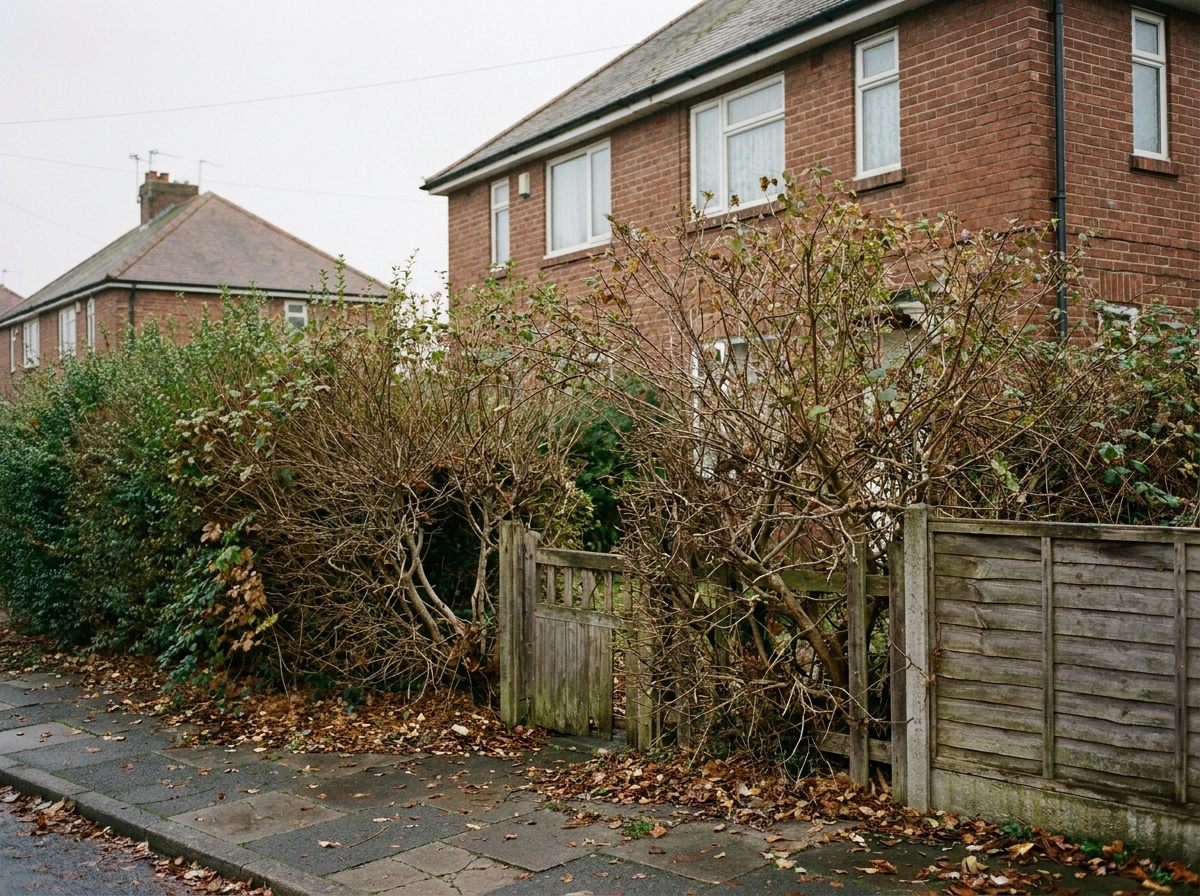
- Cutting conifer back into brown wood. Leylandii, thuja and most conifers have no dormant buds in old wood. Cut past the green and that face is bare for good. Yew is the exception.
- Letting it creep. Leaving 50mm of new growth on every year sounds like nothing. Over ten years the hedge is half a metre wider and a metre taller and the only fix is a hard reduction.
- Cutting the top wider than the base. The bottom gets shaded out, goes bare and woody, and you end up with a hedge on stilts.
- Blunt blades. They tear rather than cut. Torn ends brown off and let disease in. You can see the difference from ten metres away a fortnight later.
- Leaving clippings against the base. They rot down against the stems and hold damp exactly where you do not want it.
Hedge Trimming Wirral And Liverpool: What Coastal Wind Does
Gardens out towards West Kirby, Hoylake, Meols and New Brighton have a problem inland gardens do not. Salt-laden wind coming off the Irish Sea and the Dee estuary burns the exposed face of a hedge, and it shows up as brown, crisped foliage on the seaward side while the sheltered side stays green.
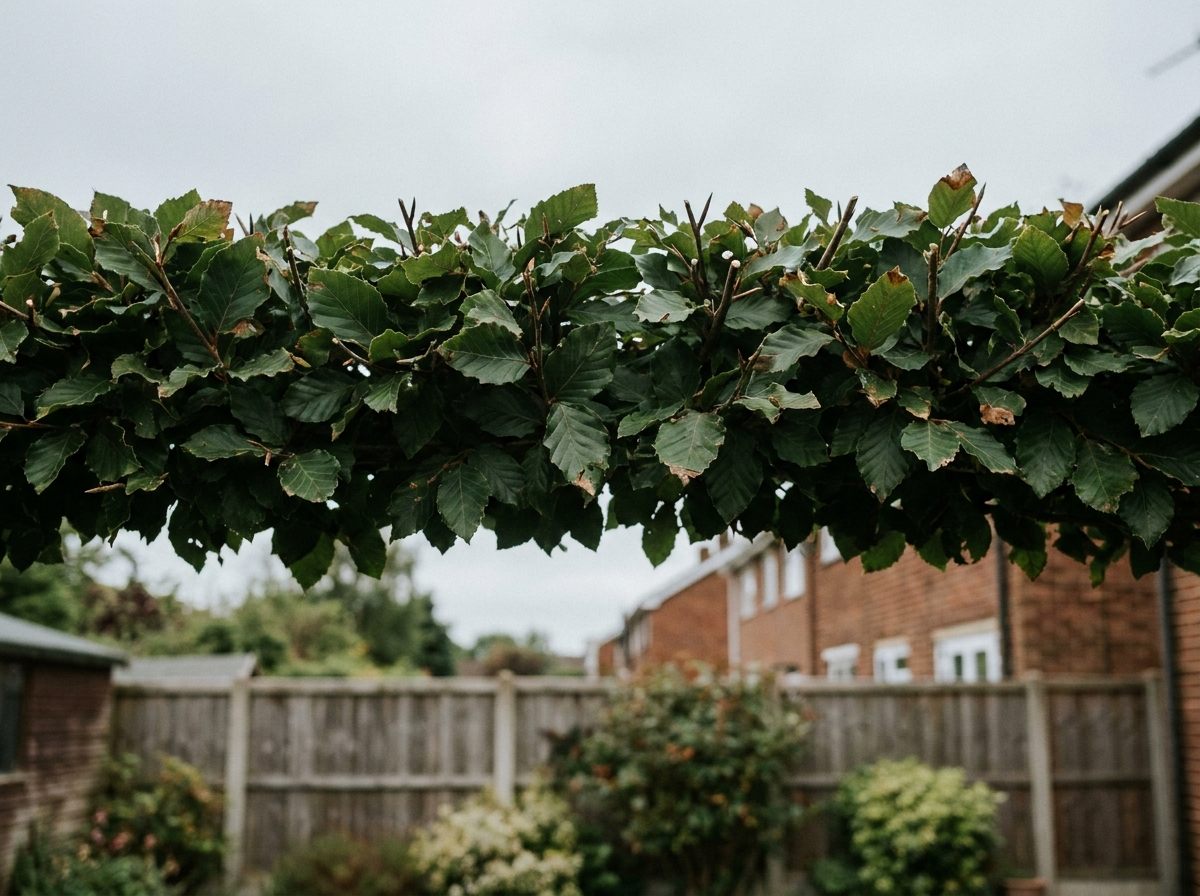
Two practical consequences. First, cut coastal hedges a little earlier, early September rather than late October, so any fresh cut surface has time to harden before the autumn gales properly start. Second, do not cut the windward face as hard as the sheltered one. That outer layer of slightly scruffy growth is doing a job, it is the windbreak protecting everything behind it.
Species matters too. Griselinia, escallonia, hawthorn and elaeagnus all cope with salt wind far better than beech or laurel. If you are replanting a coastal boundary rather than maintaining one, that is the list to choose from. Where a hedge has failed entirely on an exposed boundary, sometimes fencing with planting behind it is the more honest answer than replanting the same hedge that died.
★★★★★
“Sam and his team cut and shaped our massively overgrown hedge, built a new fence with concrete posts and very good quality panels. All three jobs are perfect and they took away all debris and cleaned up before they left.”
— Laura Bailey, verified Google review
Hard Renovation: The Late Winter Window
An end of season trim keeps a hedge where it is. It will not bring back a hedge that has already got away. For that you need a renovation, and that is a different job at a different time of year.
Hard reduction is best done in late winter, February into early March, while the plant is dormant but with the whole growing season immediately ahead to recover into. Cut hard in October and the hedge sits wounded and bare through five months of North West weather.
The usual approach on a badly overgrown deciduous hedge is one face at a time: take one side back hard in year one, let it recover for a full season, do the other side in year two. Slower, but the hedge survives it. Beech, hornbeam, hawthorn, privet and yew all take this well. Conifers other than yew do not, and it is worth being told that honestly before somebody cuts.
⏱️ September hedge cuts book two weeks ahead. Nesting season ends on 31 August and the first three weeks of September are the busiest hedge weeks of our year. Call 07510 796808 to check availability.
Book Your End Of Season Hedge Cut
Tell us what you’ve got and roughly how long it runs and we’ll give you a price. If it’s a straightforward annual trim we’ll say so. If it needs a two-year renovation we’ll tell you that instead of cutting it hard and hoping.
Free quote, no obligation. Fully insured. Google 4.5★.
Covering West Kirby, Hoylake, Meols, Heswall, Bebington, Birkenhead, Wallasey, Crosby and across Liverpool and Wirral.
Frequently Asked Questions
When Is Hedge Cutting Season In The UK?
September to the end of February, outside the main bird nesting season of 1 March to 31 August. September and October are the best weeks for an end of season trim because the hedge still has time to seal its cuts.
Is It Illegal To Cut A Hedge In Summer?
Cutting a garden hedge between March and August is not itself illegal. Damaging or destroying an active bird’s nest is a criminal offence under the Wildlife and Countryside Act 1981, so the hedge must be checked thoroughly before any cutting in that window.
How Much Does Hedge Trimming Cost?
A small run under 10 metres is usually £80 to £150. A standard garden hedge of 10 to 25 metres runs £150 to £300. Anything over 2 metres tall needing ladders or a platform is typically £300 to £500 for the day.
Can I Cut Leylandii Back Hard?
No. Leylandii and most conifers will not regrow from brown wood, so cutting past the green growth leaves that face permanently bare. Yew is the one conifer that reliably recovers from a hard cut.
How Often Should A Garden Hedge Be Cut?
Once a year is enough for beech, hornbeam and yew. Fast growers like privet and leylandii need two or three cuts across the season to stay in shape. Skipping years is what turns a trim into a reduction.
Can I Make My Neighbour Cut Their Hedge?
You can cut back growth that crosses your boundary, up to the boundary line. If an evergreen boundary hedge over two metres is blocking your light, both Wirral and Liverpool councils run a formal High Hedges complaints process, though it is chargeable and slow.