
Too long, didn’t read
Start your autumn garden clearance in Merseyside from mid September, once growth has slowed but before the ground turns to mud. That window runs to about the end of October round here. Leave it past November and heavy Wirral clay makes every job slower, messier and dearer.
Need someone local to sort it? Call Sam and the crew on 07510 796808 or get a free quote.
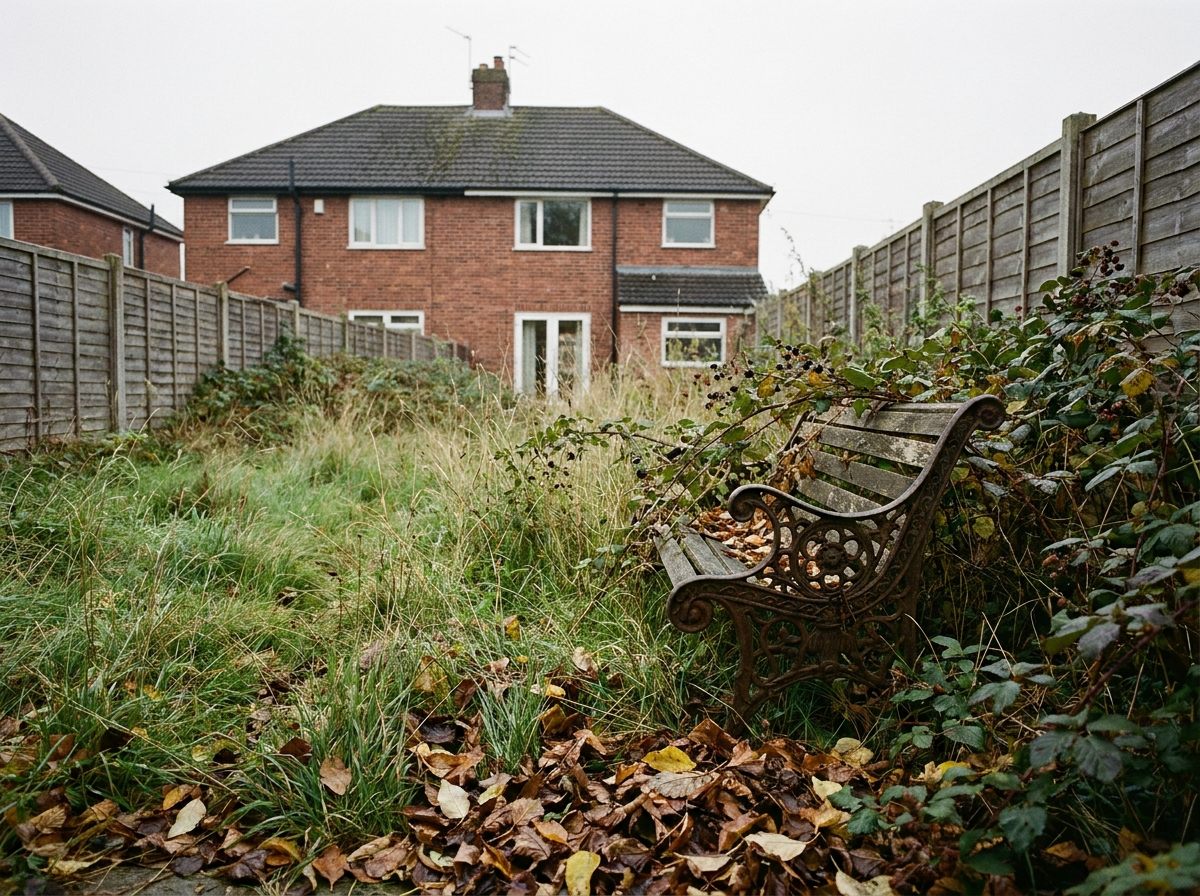
Every September we get the same call. The garden was fine in June, someone had a busy summer, and now there is knee-high grass, a border full of seed heads and a bench nobody has sat on since July. Usually it ends with the same sentence: “is it too late to do anything with it this year?”
Nine times out of ten, no. Autumn is the best window for a garden clearance we get all year. But there is a real cut-off, and on this side of the country it comes earlier than most national gardening advice suggests.
When To Start Autumn Garden Clearance In Merseyside
Mid September to the end of October. That is the window. Growth has stopped racing away, the birds have finished nesting, and the ground is usually still firm enough to get a barrow across without churning it into a swamp.
Here’s the thing about Merseyside specifically. We are wetter than most of England and a lot of the peninsula sits on heavy clay. Once the autumn rain properly arrives, usually the back half of October, clay stops draining and starts holding. A garden that took two days to clear in September can take three or four in November, because everything has to be carried rather than barrowed and the lads are working in ground that grabs at their boots.
So the honest answer is not “autumn”. It is “early autumn, and earlier than you think”.
Why Autumn Garden Clearance Beats A Spring Catch-up
Most people plan to sort it in spring. We understand why, the sun is out and the garden suddenly matters again. But clearing in autumn gives you four things a spring clear-out cannot.
- You cut before the seed drops. Every week you leave willowherb, ragwort and brambles standing is another week of seed going into your soil. Clear in September and next year’s weeding is genuinely lighter.
- You can see what you are doing. By late autumn the soft growth has died back and the actual structure of the garden shows up, the paths, the edges, the wall you forgot was there.
- The ground is still workable. Roots come out. In February on wet clay they tear and snap and leave half of themselves behind.
- You are not competing with everyone else. Our spring diary fills from February. Autumn is busy but it is not the same scramble.
The exception is a genuinely wild garden, the kind with established brambles and self-seeded sycamore. For a proper cut-back-to-bare-ground job, January and February are actually easier, because everything is dormant and leafless and you can see the bones of it. We will tell you if yours is one of those.
Garden Clearance Wirral And Liverpool: What The Job Actually Covers
“Garden clearance” means different things to different firms, which is why quotes vary so wildly. When we quote a garden clearance on the Wirral or in Liverpool, this is what is in it.

- Cutting back and removing overgrown grass, weeds, brambles and nettles
- Pruning or removing shrubs that have outgrown their spot
- Clearing borders back to soil so you can actually plant in them
- Lifting rubbish, old pots, broken furniture and the bags of stuff behind the shed
- Sweeping paths, patios and the drive when we are done
- Taking every bit of it away, properly, under a waste carrier licence
That last one is the one to ask about. A cheap quote often skips disposal, or quietly assumes you will fill your own bin over the next four months. Ask whoever quotes you whether removal is in the price, and ask to see the licence. It takes ten seconds and it is the single biggest difference between two quotes that look similar on paper.
Overgrown Garden Clearance: When A Tidy Is Not Enough
There is a line between a tidy and a clearance, and it is worth knowing which side you are on before you ring anyone. A tidy is a day, maybe less. A clearance is a skip or several van loads and a crew.
You are into overgrown garden clearance territory if any of these are true:
- The grass is above your knee and has gone to seed
- Brambles have got into the fence line or the hedge base
- There are self-seeded saplings with a proper woody stem, sycamore and buddleia are the usual culprits round here
- You cannot see the edge of a path or a border
- It has been more than two growing seasons since anyone touched it
Two seasons is the point where the job changes character. One summer of neglect is soft growth and comes out easily. Two summers and things have woody stems and established root systems, and it becomes a dig rather than a cut.
We get a lot of these from people who have just bought a house, or who are clearing a parent’s garden. Nobody needs to feel awkward about it. Rob’s garden in the review further down had not been touched in a long while and it was still a straightforward job for the crew.
Got a garden that’s got away from you?
Van-load pricing, everything taken away properly, licensed waste carrier. We’ll tell you straight what it’ll cost before we start.
How Much Does Garden Clearance Cost In Merseyside?
Most garden clearance is priced on volume and access rather than by the hour. Two gardens the same size can differ by a couple of hundred pounds purely because one has a side gate and the other means carrying everything through the house.
Those are the bands we quote in most often across Wirral and Liverpool. The things that push a job up the table are access, disposal volume, and whether there is anything in there that needs specialist handling. Japanese knotweed is the obvious one, and if we spot it we will tell you rather than cut it and spread it.
Bottom line: get the quote in writing, and get it before the ground goes. An autumn quote and a January quote on the same garden are not the same number.
Autumn Leaf Clearance And The Jobs That Come With It
Leaf clearance is the part people underestimate. A single mature sycamore will cover a small back garden two or three times over between late September and mid November, and wet leaves left sitting on grass will kill it in patches within weeks.
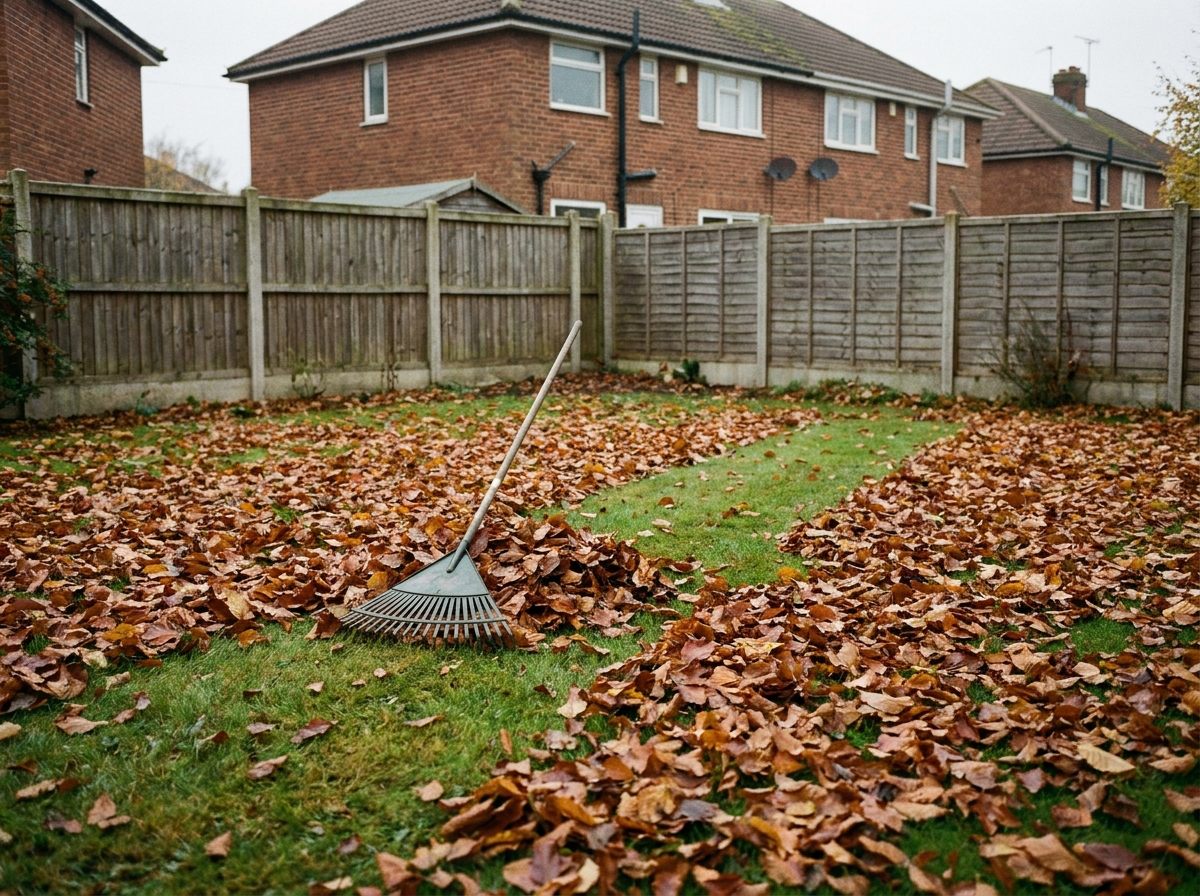
The rule we work to is simple. Do not let leaves sit on grass for more than about a fortnight. On borders they are fine, they rot down and feed the soil. On a lawn they block what little winter light there is and hold moisture against the grass crown, which on Merseyside clay is already fighting to stay alive.
Leaf fall is also what triggers two other autumn jobs. Gutters block, usually in the same fortnight the leaves come down, and if yours overflow onto a wall you will find out about it in January. And hedges want their last cut of the year in September or early October, which we cover in more detail on our hedge trimming page. If we are already on site clearing, both are worth doing in the same visit rather than paying for a second call-out.
Where Your Garden Waste Actually Goes On The Wirral
Worth knowing, because it catches people out. On the Wirral, garden waste goes in the brown bin, not the green one. The green bin is for general non-recyclable waste. It is a subscription service, collected fortnightly, and you sign up through Wirral Council’s brown garden waste bin service. Liverpool runs its own separate arrangement, so if you have moved across the water recently do not assume it works the same way.
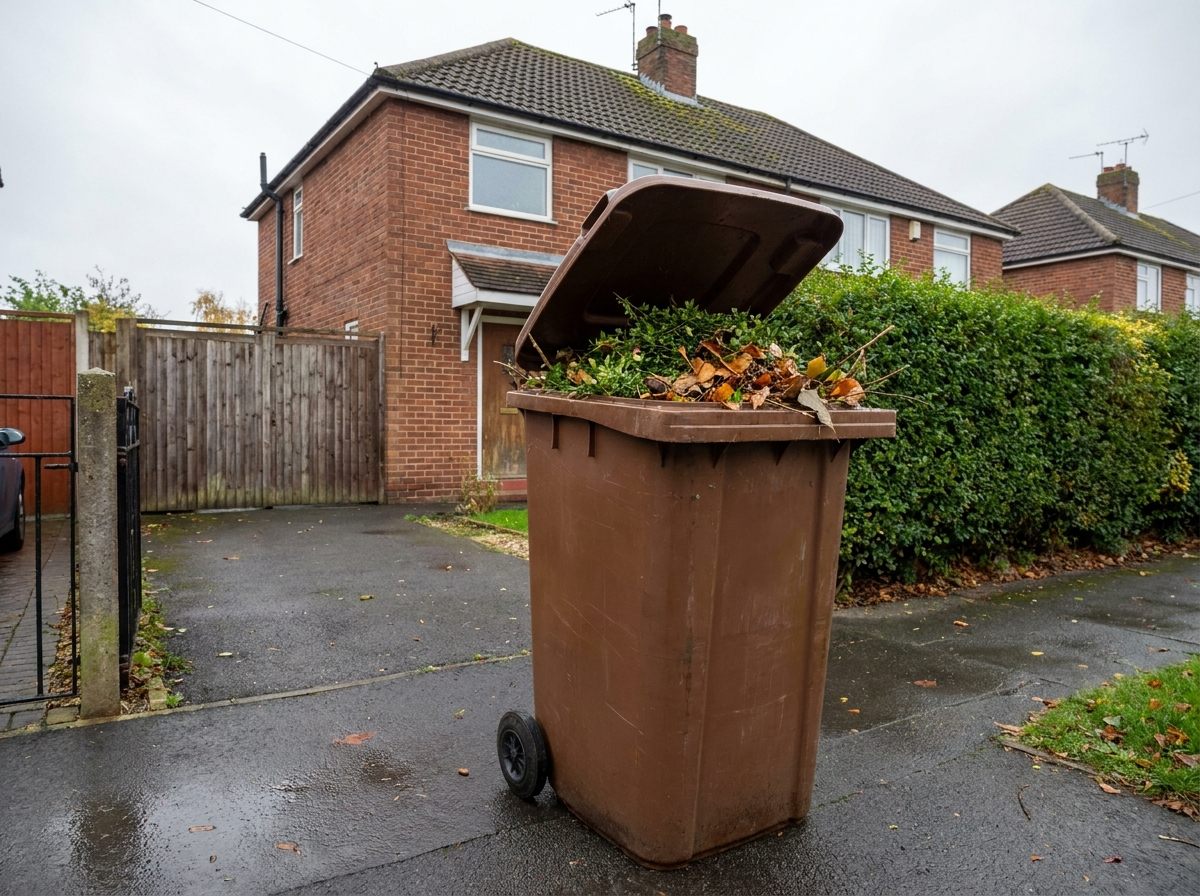
Here is the practical problem. One brown bin, emptied every two weeks, holds a fraction of what comes out of a proper clearance. We regularly take six to ten bin-equivalents out of a single overgrown garden. Filling your own bin over four months is a real option if you are not in a hurry, and we will say so, but for most people it is the reason they ring somebody in the first place.
When we clear, it goes out on our licence and you get nothing left behind. That matters more than it sounds. Fly-tipped garden waste traced back to your address is your problem legally, even if you paid someone else to take it, so always check the person loading the van is licensed to.
What A Proper Autumn Clearance Leaves Behind
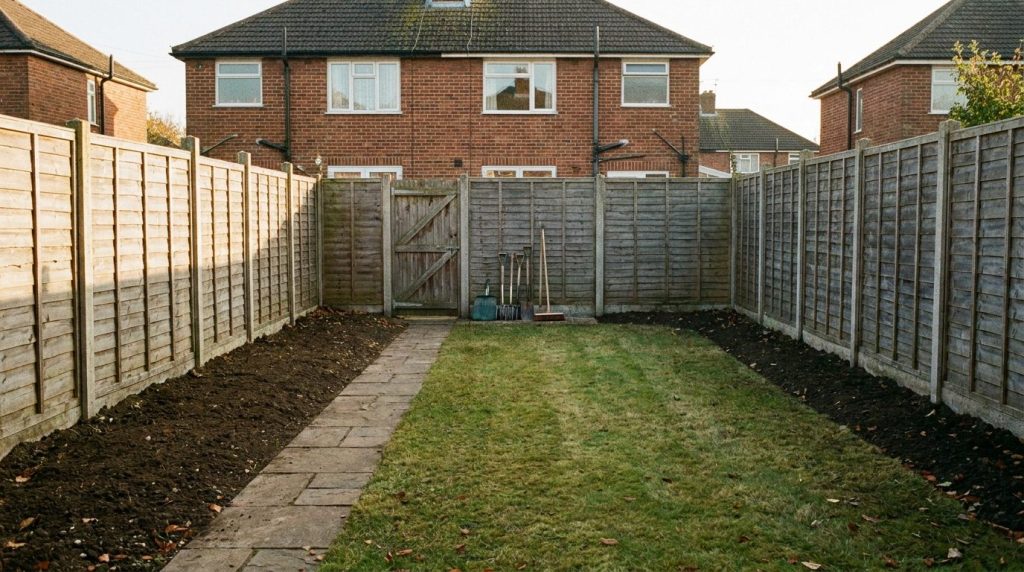
A finished clearance should not look like a building site. Borders back to bare soil and raked level. Grass cut down to something a mower can take over from. Paths and patios swept. Fence lines visible again. Nothing left in a pile “for the next visit”.
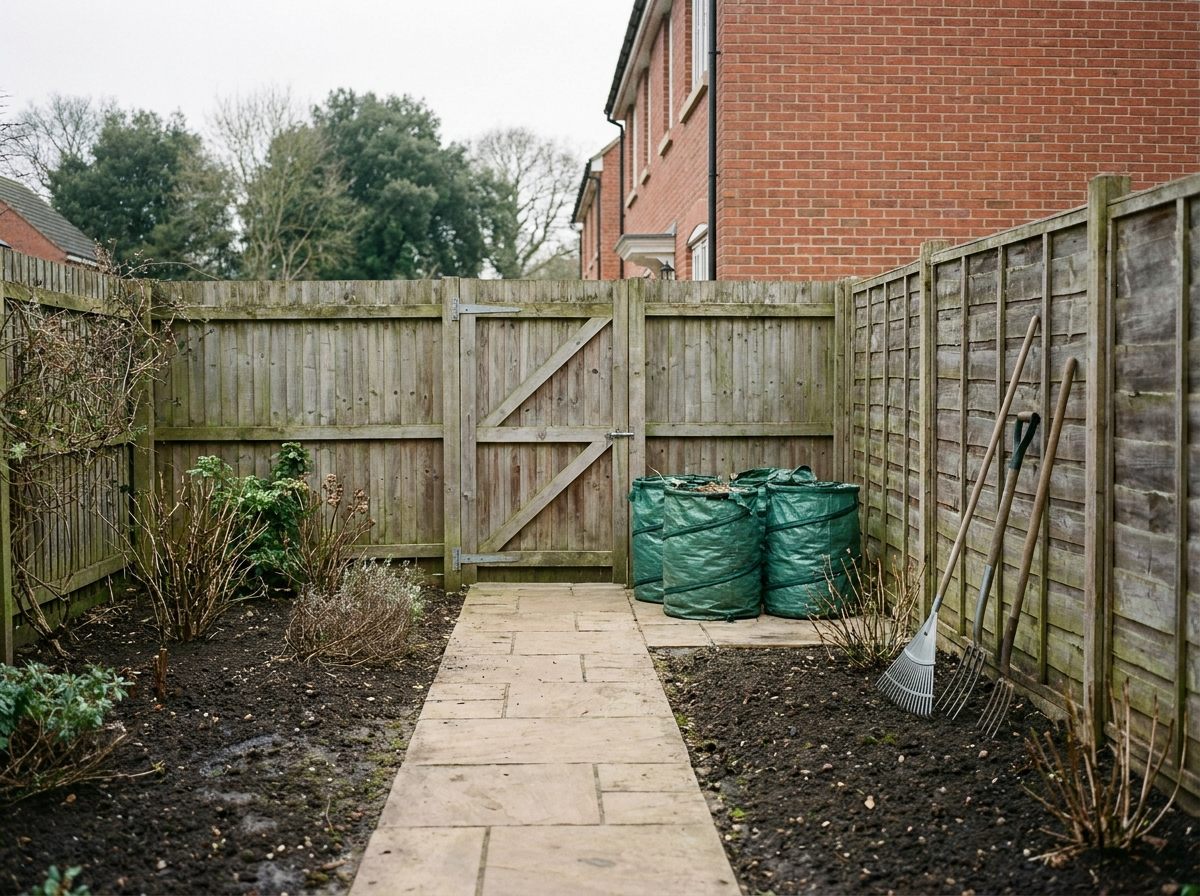
The point of doing it in autumn is what happens next. A garden cleared in October can be planted, turfed or left to overwinter clean, and it starts next March under control instead of two seasons behind. That is the difference between a clearance and a holding action.
★★★★★
“The garden was overgrown, but they handled it with ease and left it looking spotless. I’m extremely happy with the results.”
— Rob David, verified Google review
What To Do With The Garden Once It Is Cleared
This is where autumn earns its money. Clear in spring and all you can really do is start mowing. Clear in October and you are standing in front of the best planting window of the year, with about six weeks of usable ground left.
Soil is still holding summer warmth in October, and the rain does the watering for you. Anything that goes in now spends the whole winter putting roots down instead of fighting to stay alive in dry May soil. In our experience a shrub planted in October is a full season ahead of the same shrub planted the following April.
Worth doing while the ground is bare and workable:
- Mulch the borders. Fifty to seventy-five millimetres of bark or compost over cleared soil. It suppresses the weed seed that is already sitting in there waiting for spring, holds moisture, and on clay it genuinely improves the structure of the top layer over a couple of years. This is the single highest-value thing you can do with a cleared border.
- Get shrubs and hedging in. Bare-root hedging is available from November and costs a fraction of pot-grown. If a boundary needs replanting, this is the season to do it.
- Lay turf if you are going to. Autumn turf takes better than spring turf on clay, because it roots into warm, damp ground rather than being asked to establish through a dry spell. Ground preparation matters more than the turf itself, which is why we cover it properly on our turfing page.
- Fix the edges and paths. With everything cut back you can actually see where the boundaries are. Edging done now saves a fortnight of fiddling next spring.
- Deal with the fence. Nine times out of ten a clearance reveals fence panels that the brambles were quietly holding up. Better to find that out in October than during the first February gale.
What not to do: do not dig over wet clay, and do not leave bare soil bare all winter. Exposed clay caps over in heavy rain, the surface seals, and by March you have a crust that water runs off rather than into. Mulch it, plant it, or at the very least leave the roots of what you cut in place to hold the structure together.
DIY Or A Garden Clearance Service Near Me?
Here’s the honest answer. If it is one season of overgrowth, you have a weekend free and somewhere to take the waste, do it yourself. Hire a brush cutter for the day, work in sections, and you will get there.
Where DIY stops making sense is disposal and woody growth. The cutting is the quick part. It is the eight car boot runs to the tip, or the realisation that the sycamore stump needs a mattock and two hours, that turns a weekend into a month of weekends. Add in that most tips restrict van access and charge for garden waste, and the sums change.
The other thing worth being straight about: if you have a bad back, it is not worth it. We clear a lot of gardens for people who could have done it fifteen years ago and would rather not find out whether they still can.
Once it is clear, keeping it clear is the easy part. Most people who have us in for a clearance move onto a fortnightly or monthly garden maintenance visit afterwards, which costs a fraction of doing the whole thing again in two years. And while we are up the ladder for the gutters, gutter cleaning in the same visit saves a separate call-out.
⏱️ Autumn clearance books out from late September. The workable window on Wirral clay closes around the end of October, and the last two weeks of it are always the busiest. Call 07510 796808 to check availability.
Get Your Garden Cleared Before The Ground Goes
Tell us what you’re looking at and we’ll give you a straight price. If it’s a two-hour tidy we’ll say so. If it’s a three-day clearance we’ll say that too, and you’ll know before we start.
Free quote, no obligation. Fully insured. Google 4.5★.
Covering Birkenhead, Bebington, Bromborough, Heswall, West Kirby, Wallasey, Crosby, Allerton and across Liverpool and Wirral.
Frequently Asked Questions
When Should I Start Autumn Garden Clearance?
Mid September to the end of October in Merseyside. Growth has slowed and the ground is still firm enough to work. After late October, clay soil holds water and the same job takes noticeably longer.
How Much Does Garden Clearance Cost?
A one-off tidy runs £100 to £250. A standard clearance on a semi-sized garden is usually £250 to £450. Heavily overgrown gardens with woody growth run £450 to £900 depending on access and how much comes out.
Is It Too Late To Clear A Garden In November Or December?
No, we clear gardens year round. It costs more because wet clay slows everything down. The exception is a heavily wooded clearance, which is genuinely easier in January and February when everything is dormant and leafless.
Do You Take The Garden Waste Away?
Yes, removal is included in every clearance quote and it goes out under our waste carrier licence. You get nothing left in a pile at the end. Always check this with any quote, because some exclude disposal.
Which Bin Does Garden Waste Go In On The Wirral?
The brown bin, on a paid subscription collected fortnightly. The green bin is for general non-recyclable waste. Liverpool operates a separate scheme, so check your own council if you have moved recently.
How Long Does A Garden Clearance Take?
Most standard clearances are a single day with a crew of two or three. Heavily overgrown gardens run to two or three days. We will tell you which yours is when we quote, not halfway through.