

Waterlogged New-Build Lawn in Bromborough, Moreton or Saughall Massie? Here’s the Wirral Clay Fix
📝 Too long, didn’t read
New-build lawns in Bromborough, Moreton and Saughall Massie flood because developers roll turf straight onto compacted Wirral clay with no drainage prep. The fix is almost never moss killer or more seed. It’s opening the ground up, installing land drains or a soakaway, and relaying turf on a proper base. Done once, done right, lasts years.
Need someone local to sort it? Call Sam and the crew on 07510 796808 or get a free quote.
Every spring we get the same call from Bromborough, Moreton, Saughall Massie, and the newer estates round Bebington and Heswall fringes. “We moved in eighteen months ago, the lawn looked fine, and now it’s a swamp every time it rains.” Nine times out of ten, the problem isn’t the grass. It’s what’s underneath it.
Why your new-build lawn floods on Wirral clay
New-build developers on Wirral don’t have time to fix the ground before handover. Heavy machinery rolls over the plot for months, the subsoil ends up compacted like concrete, and the finished turf gets laid on top with a couple of inches of topsoil at best. For the first summer the grass looks fine because the roots are still sitting in that shallow topsoil layer. Then autumn comes, the rain starts, and there’s nowhere for the water to go. By February the whole lawn is standing water and yellow, dying grass.
The Wirral is sitting on heavy clay in most of the newer estates. Clay holds water. Compacted clay holds water and refuses to let roots through. Add a Merseyside winter with 900mm+ of rain and no drainage plan, and the lawn you paid for as part of your mortgage is essentially a shallow pond.
The signs it’s drainage, not the grass
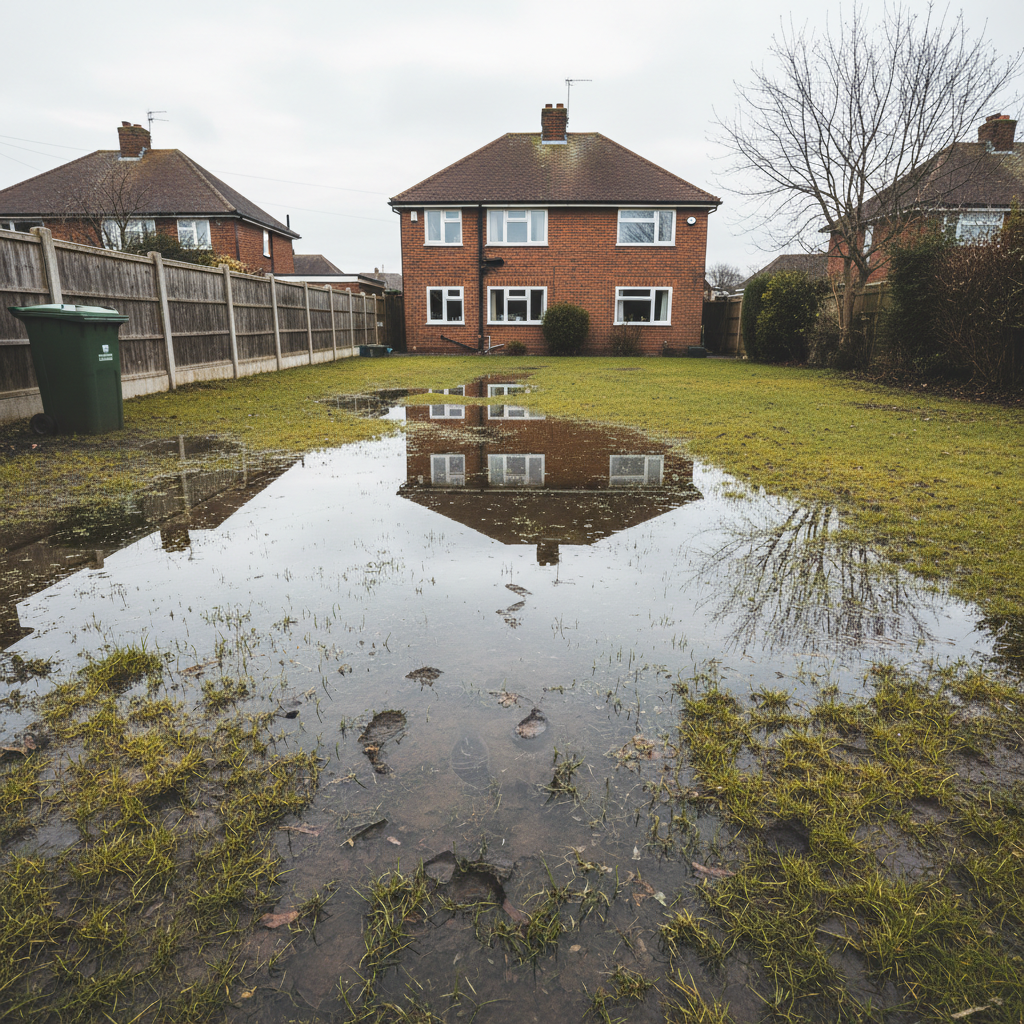
Before you spend £40 on moss killer that won’t fix anything, check for these tells:
- Water stands on the surface for hours after rain, rather than soaking in
- Footprints fill with water when you walk across
- Moss is winning across most of the lawn, not just shady corners
- Grass is yellow in the wet bits and brown in summer (roots can’t go deep, so it dries out fast)
- You can push a garden fork in four inches and hit something that feels like concrete
If two or more of those are true, more grass seed won’t help. The ground needs opening up.
What actually fixes a waterlogged clay lawn
There are three real fixes depending on how bad it is. We do all of them across Wirral and can tell you on a quote visit which one your garden needs.
1. Hollow-tine aeration plus soil improvement
For milder cases. We pull out thousands of small cores of clay, top-dress with sharp sand and a loam mix, and overseed. It opens the surface, lets water percolate through the top 4–6 inches, and the grass roots can finally get deeper. Usually £300–£600 for a standard Wirral garden. Works best combined with proper aftercare.
2. Land drains (French drains)
For gardens where water is physically sitting on the surface in winter. We cut trenches across the garden, lay perforated pipe in gravel, connect it to a soakaway or an existing drain, and relay the turf on top. This is what most new-build lawns actually need. Typical cost is £1,200–£3,000 depending on garden size and where the water needs to go. Lasts decades.
3. Full lift, re-profile, new turf
For the worst cases. We lift the existing turf, dig out compacted clay, add proper subsoil and topsoil, correct the levels so water runs off the lawn rather than pooling in the middle, and lay fresh turf on a prepared base. £2,000–£5,000 for most domestic gardens. This is what should have been done by the developer in the first place.
Don’t want to tackle it yourself?
We’ve been handling new lawns on heavy Wirral clay since 2011. We’ll prep the ground properly so your turf actually takes, not just rolled out and left. One visit for a quote, honest numbers, proper job.
Can you DIY any of this?
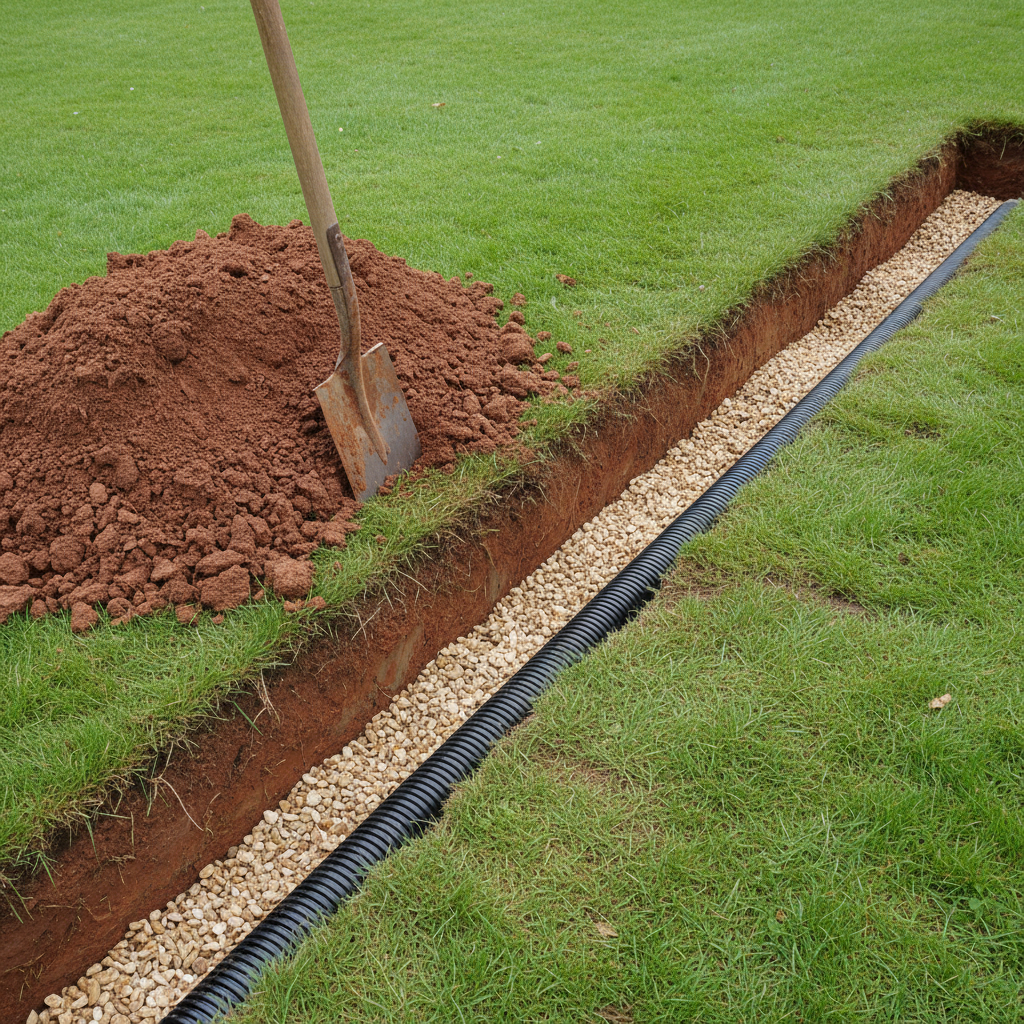
Honestly? Some of it. If you’ve got the time and a strong back, you can hire a hollow-tine aerator for about £80 a day and do a reasonable job on option 1. Get sharp sand and loam delivered, top-dress heavily, overseed, and keep it watered for six weeks. A willing homeowner can get most of the benefit.
Land drains and full re-profiling? Don’t. You need to know where to cut, where the water actually goes (you can’t just dump it into the storm drain, that’s not legal), and how to get the falls right so the water runs the way you want it to. Get it wrong and you’ve shifted the problem into your neighbour’s garden, which is its own kind of headache. The government’s surface water drainage guidance covers what you can and can’t do with runoff.
What the fix actually looks like, local example
A lot of what we do on these estates looks the same. A garden that was advertised as “landscaped, ready to enjoy” has turned into a yellow, mossy, squelching patch of ground. The quote visit takes about half an hour. We tell you what’s needed, what it’ll cost, and whether you can get away with option 1. The work takes two to five days depending on the size. You have a garden you can actually walk on in February by the end of it.
★★★★★
“Our garden was seriously waterlogged. Sam and his team worked so hard in horrible weather, laying land drains and removing tons of thick clay soil. They created a lovely garden which can now be used and enjoyed. Polite and friendly lads, would recommend without hesitation.”
Anne Cunningham, Wirral, verified Google review
What it costs and how long it takes
Rough numbers for a standard Wirral semi garden (50–120 square metres of lawn):
- Aeration and top-dressing: £300–£600, one day on site, visible improvement over the following season
- Land drains with turf relay: £1,200–£3,000, two to four days on site, fixed straight away
- Full lift and re-profile: £2,000–£5,000, four to seven days on site, a proper long-term fix
We give a fixed, written quote before any work starts. No creeping extras. If we find something unexpected mid-job (an old drainage channel, a forgotten soakaway), we stop and talk to you before spending your money.
⏱️ May is the last clean window for a proper lawn job before summer. June through August is too hot and dry to establish new turf well. Call 07510 796808 to check availability.
Ready to sort your lawn?
We’ve been rescuing waterlogged gardens across Liverpool and Wirral since 2011. Reliable crew, honest quotes, tidy finish. If your new-build lawn has turned into a swamp, we’ve seen it before and we’ll tell you straight what it needs.
Free quote, no obligation. Fully insured. Google 4.5★.
Serving Bromborough, Moreton, Saughall Massie, Bebington, Heswall, West Kirby, Birkenhead and surrounding Wirral and Liverpool areas.
Frequently Asked Questions
Why is my new-build lawn always wet?
Because heavy construction machinery compacted the clay subsoil before your turf was laid. Water has nowhere to drain, so it sits on the surface. It’s a drainage problem, not a grass problem.
Can I claim this back from the developer?
Sometimes. If you’re still inside your NHBC warranty (usually two years for workmanship, ten years for structural) it’s worth raising. Most homeowners we see have already tried and been fobbed off, which is why they call us.
How long does a waterlogged lawn fix take?
Anything from one day for aeration and top-dressing, up to a week for a full land-drain installation with new turf. Most jobs are two to four days on site.
What’s the best time of year to fix a waterlogged lawn?
March to early May, or September to October. Avoid the hottest weeks of summer (new turf struggles to establish in drought) and the coldest weeks of winter (frozen ground makes digging slow and the grass can’t root).
Will I need to do this again in five years?
If it’s done properly, no. Land drains laid correctly in gravel with the right falls will last decades. Topsoil improvement needs occasional top-ups but the main work is a one-off.
Do you work in Bromborough, Moreton and Saughall Massie?
Yes, all over Wirral. Those estates are some of our most common callouts because the clay is so heavy and the developer turf is routinely laid on unprepared ground.