
Artificial Grass in Liverpool: Is It Worth It? (Honest Local Advice)
Too long, didn’t read
For most Liverpool and Wirral gardens, artificial grass is worth it if you’re dealing with a muddy, moss-heavy, or shaded lawn that never looks right whatever you do. It costs £1,500–£3,500 installed for a typical domestic garden, lasts 10–15 years, and eliminates all the ongoing maintenance. It’s not perfect — it gets warm in direct sun, and some people strongly prefer real grass — but Merseyside’s wet climate makes it a practical choice for a lot of homes.
Thinking about artificial grass for your garden? Call Sam and the crew on 07510 796808 or get a free quote.
Every spring we have the same conversation with homeowners across Liverpool and Wirral: the lawn looks terrible, it’s mostly moss, the kids have worn a mud trench across the middle, and they’re wondering whether to bother trying to rescue it again. At some point, people start asking whether artificial grass is just easier.
It often is. But it’s not the right answer for everyone, and some of the claims made about it online — “zero maintenance”, “looks just like real grass” — need a bit of unpicking. Here’s our honest take, based on having installed artificial grass across Merseyside for over a decade.
Is Artificial Grass a Good Idea in Merseyside’s Wet Climate?

Yes — probably more so than in drier parts of the UK. Real grass in Liverpool and Wirral spends four to five months of the year looking wet, sparse, and mossy. The wet winters compact the soil, the shade from neighbouring properties limits growth, and the clay subsoil in Bebington, Bromborough, and most of the eastern Wirral means drainage is a constant battle.
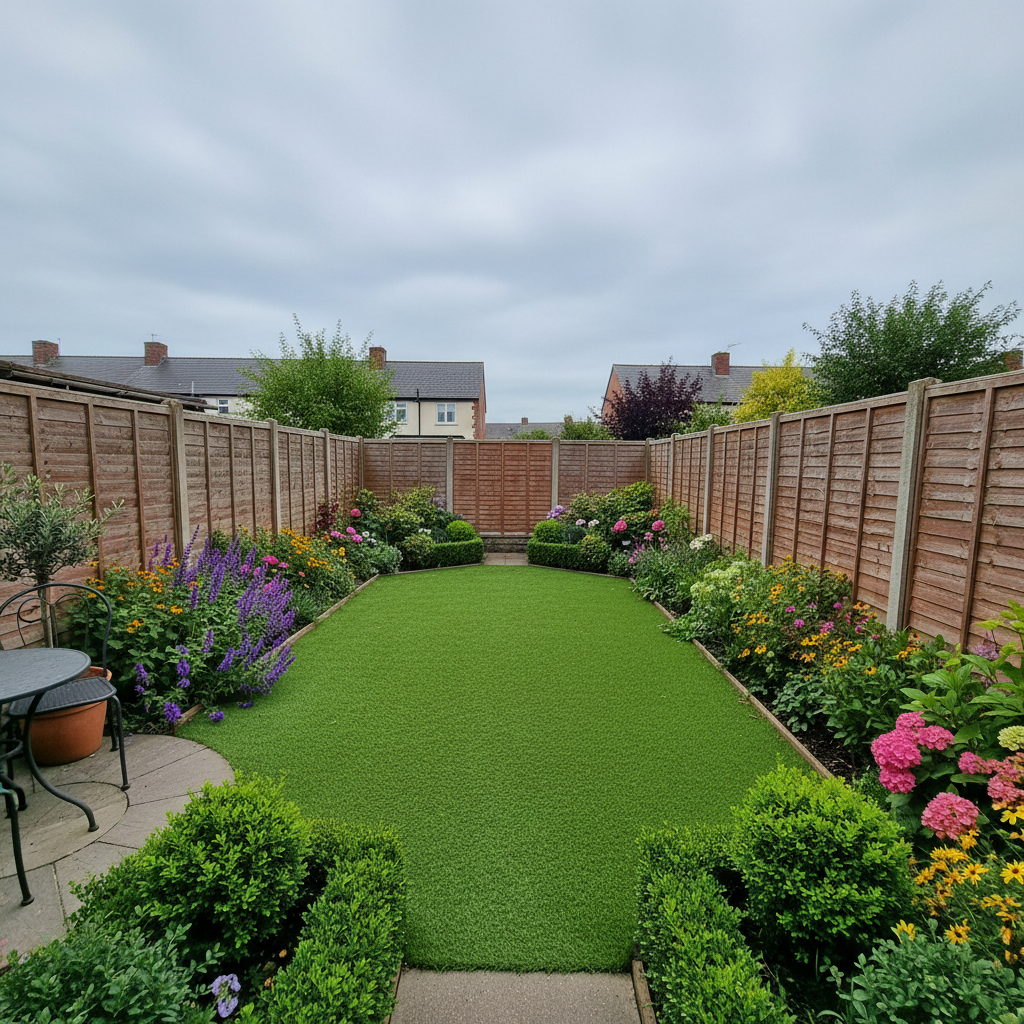
Artificial grass solves all of these in one go. A quality installation on a proper sub-base drains well (most modern artificial grass has a permeable backing), looks consistent year-round, and doesn’t care about shade or clay. For gardens where real grass genuinely can’t thrive, it’s not a compromise — it’s the better option.
Where artificial grass is less compelling: large, open, well-drained gardens in full sun where real turf genuinely thrives. If you’ve got a good lawn and you just want it maintained properly, turfing and regular lawn care will serve you better than replacing it.
What Does Artificial Grass Cost to Install in Liverpool?
Installed costs for a quality artificial grass job in Liverpool or Wirral typically run:
| Garden size | Typical installed cost | Notes |
|---|---|---|
| Small (up to 20m²) | £1,200–£2,000 | Standard semi-detached front or back |
| Medium (20–50m²) | £2,000–£3,500 | Typical Wirral or Liverpool detached back garden |
| Large (50m²+) | £3,500–£6,000+ | Large garden or commercial property |
Cost per m² installed is typically £60–£90. The materials themselves (the grass) account for around 40% of that — the rest is labour and sub-base preparation.
The sub-base is where many cheaper quotes fall down. A properly installed artificial lawn needs a compacted MOT Type 1 aggregate sub-base (typically 75–100mm deep) to give it proper drainage and stability. If a quote skips this step or uses a thin sand layer instead, the grass will sink, bubble, and fail within a few years. It’s the main reason we see artificial grass relaid in gardens where it’s only a few years old.
The Honest Pros and Cons
What artificial grass does well
- No mowing, no feeding, no moss treatment. You’re done with all of it. That’s typically four to eight hours of work per month during summer, gone.
- Looks decent year-round. It doesn’t go brown in a dry July or turn to mud in a wet November. For gardens that are visible from the house all year, that matters.
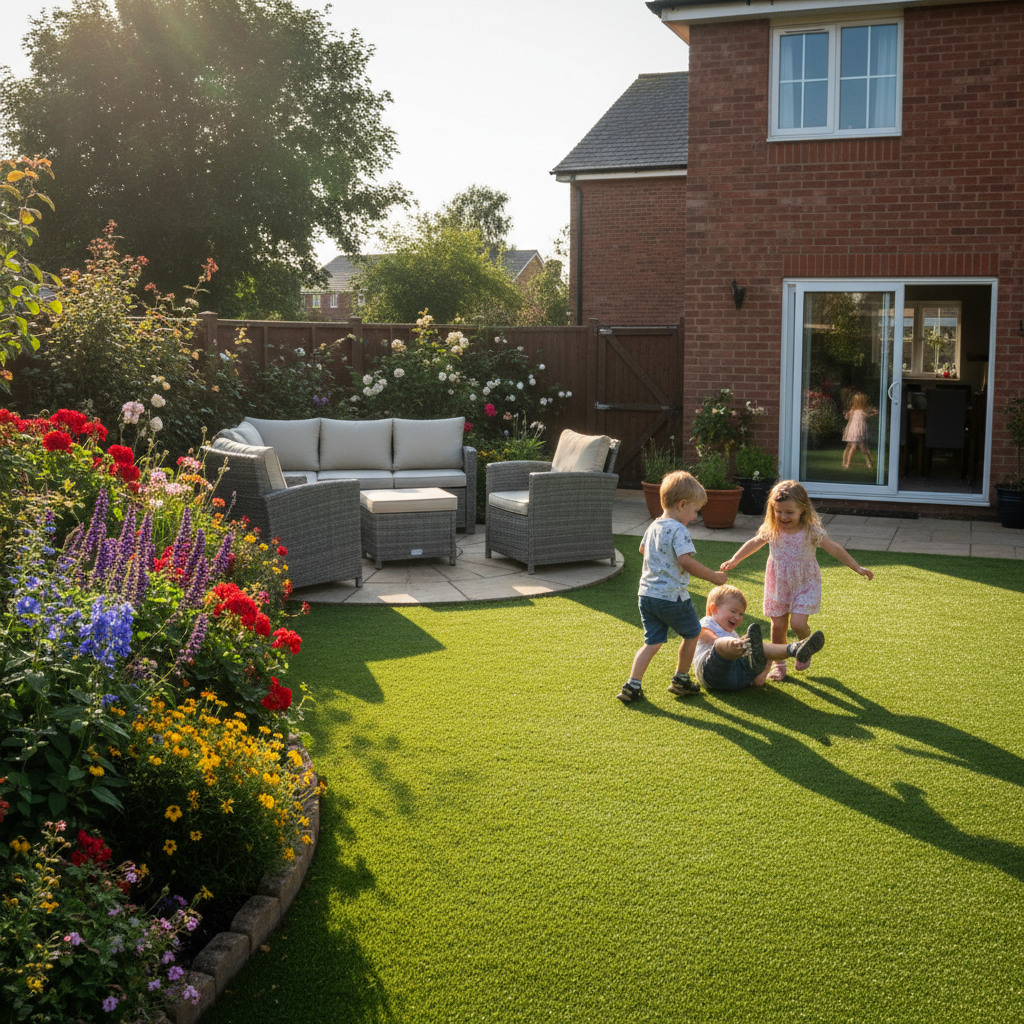
- Works for dogs and kids in all weather. They come in without bringing half the garden with them. This is consistently the thing people mention most once it’s in.
- Works on clay subsoil when properly installed with a sub-base and drainage membrane.
- Lasts 10–15 years with a quality product and proper installation. The economics over that period compare very favourably against ongoing lawn care costs.
The genuine downsides
- Gets warm in direct sun. A south-facing garden in a July heatwave — artificial grass can get uncomfortably hot underfoot. Real turf stays cooler. This matters more for gardens that bake in summer than for typical Merseyside gardens.
- Dog waste still needs dealing with. It doesn’t disappear. It needs regular hosing or cleaning, same as any surface. Most pet owners manage fine, but it’s not the “zero maintenance” some suppliers suggest.
- Upfront cost is significant. The economics work over 10+ years, but the upfront number is real.
- Some people don’t like how it feels or looks up close. Modern artificial grass is a long way from the old neon green carpet of the 1980s, but it’s not identical to real turf and some people simply prefer the real thing.
- Environmental considerations. It’s plastic, it reduces the garden’s contribution to insect habitat and soil health, and it doesn’t biodegrade. Worth factoring in if this matters to you.
Get a quote for artificial grass in your Liverpool or Wirral garden
We’ve installed artificial grass in hundreds of gardens across Merseyside — from small front forecourts in Birkenhead to large back gardens in Heswall and Bebington. We’ll give you a straight quote and honest advice on whether it’s the right call for your specific garden. Free visit, no obligation.
Does Artificial Grass Need Planning Permission?
For rear gardens: generally no planning permission is needed.
For front gardens, the rules are slightly more involved. Under permitted development rights, if you’re covering more than 5 square metres of a front garden with a non-permeable surface, you need planning permission — or the surface must be permeable (which modern artificial grass with permeable backing typically satisfies). Most front garden artificial grass installations using permeable-backed grass comply without needing a planning application, but it’s worth confirming with your installer.
Conservation areas and listed buildings have additional restrictions — if you’re in one of those, it’s worth a quick call to Wirral or Liverpool council planning before you book anything. We can advise on this as part of the quote visit.
★★★★★
“We are very happy with the work Sam and his team done on our garden. He and his team installed a large area of artificial grass, extended the patio and installed planters. We found Sam transparent, communicating with us throughout, and always keen to ensure we were satisfied with the work.”
Gary | Google Review ⭐ 5/5
How Long Does Artificial Grass Last?
A quality product, installed properly, lasts 10–15 years. Some installations push to 20 years. The things that shorten the lifespan:
- Low-quality grass (thin fibres that flatten and don’t spring back after a few seasons)
- Poor sub-base preparation (causes sinkage, bubbling, and drainage failure)
- UV degradation from prolonged direct sunlight (less of an issue in Merseyside than further south)
- Heavy furniture or play equipment left in fixed positions for years (leaves permanent compression)
When we quote, we’ll tell you the product spec and the expected lifespan. We don’t install cheap grass because we don’t want to be called back in three years to relay it.
Artificial Grass vs Real Lawn: How to Choose
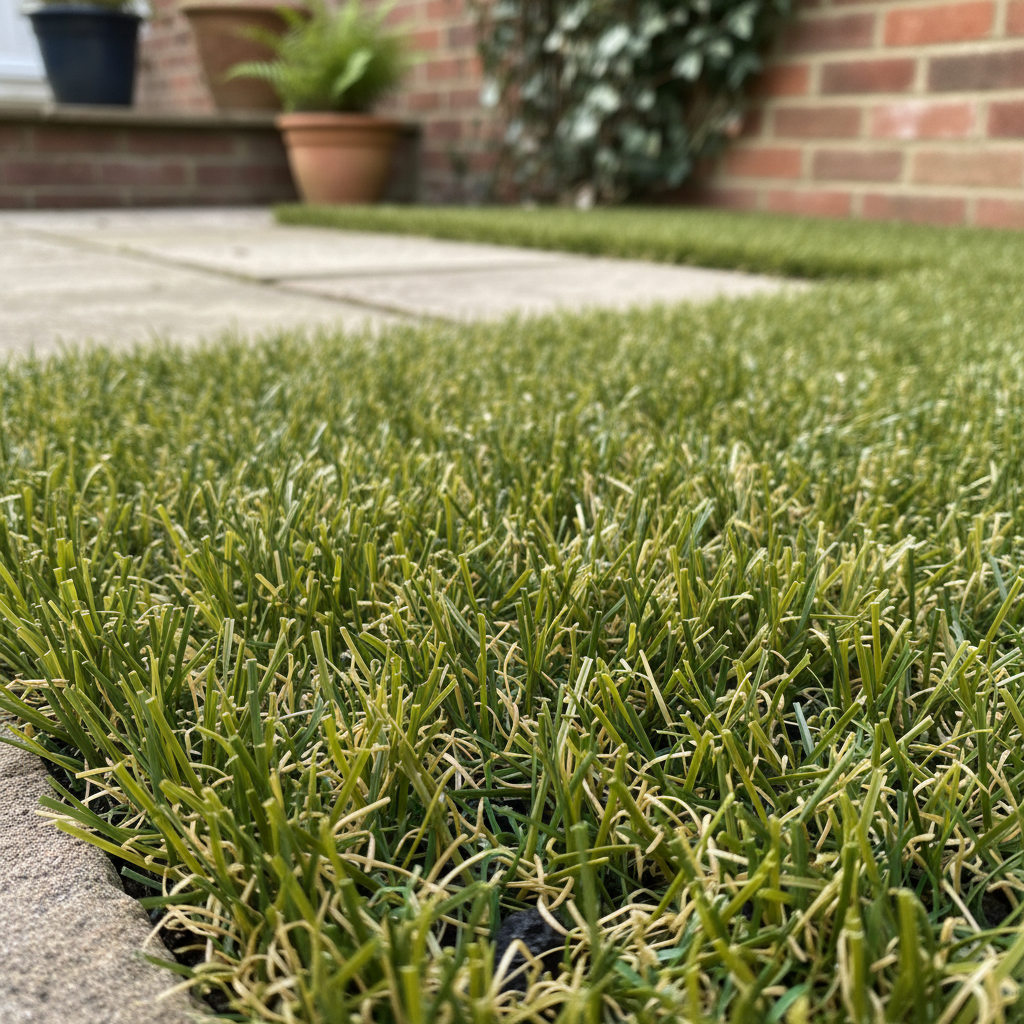
Here’s the honest version of the choice:
Choose artificial grass if: your current lawn is mostly moss or mud, the garden is heavily shaded, you have dogs or children who use it constantly, you genuinely dislike lawn maintenance, or the garden has drainage problems that make real turf impractical.
Stick with real turf if: you enjoy your garden and like tending it, you have a well-drained, sunny garden where grass grows well, you care about the ecological contribution of a living lawn, or you simply prefer the feel and smell of real grass in summer.
Both are valid choices. We install both — artificial grass installations and real turf — and we’ll tell you honestly which one suits your garden rather than pushing you towards whichever is a higher-ticket job.
Summer installation slots filling — book early
Most people decide on artificial grass in spring and want it in before summer. June and July installation slots fill quickly. If you want it done before the school holidays, it’s worth getting a quote in now. Call 07510 796808 or send us a message.
Get an Honest Quote for Artificial Grass in Liverpool or Wirral
We’ve been installing artificial grass across Merseyside since 2011. We use quality products, prepare the sub-base properly, and give you a straight figure before any work starts. If real turf would actually suit your garden better, we’ll tell you that too. Free quote visit, no obligation.
Free quote, no obligation. Fully insured. Google 4.5★.
Serving Liverpool, Wirral, Birkenhead, Bebington, Bromborough, Heswall, West Kirby, Wallasey, Bootle, Crosby, and surrounding areas.
Frequently Asked Questions
How much does it cost to have artificial grass installed in Liverpool?
Installed cost for a quality artificial grass job in Liverpool or Wirral typically runs £1,200–£2,000 for a small garden (up to 20m²), £2,000–£3,500 for a medium garden (20–50m²), and £3,500+ for larger spaces. Cost per m² installed is around £60–£90. Always get at least two quotes and ask what sub-base preparation is included.
How long does artificial grass last?
A quality product installed on a proper sub-base typically lasts 10–15 years. Some installations push to 20 years. The main factors that shorten the lifespan are low-quality grass fibres, poor sub-base preparation (the most common cause of early failure), and heavy objects left in fixed positions for long periods.
Does artificial grass need planning permission in Liverpool or Wirral?
For rear gardens: no planning permission is generally required. For front gardens: if the surface is permeable (which modern artificial grass with permeable backing typically satisfies), no planning application is needed. Conservation areas may have additional restrictions. We can advise as part of the free quote visit.
Is artificial grass good for dogs?
Yes — most dog owners are very happy with artificial grass. Dogs can use it in all weather without churning it up or tracking mud indoors. The key consideration is cleaning: dog waste needs to be picked up and the area hosed down regularly, same as any garden surface. Artificial grass with good drainage keeps this manageable. It’s not zero-maintenance where dogs are involved, but it’s significantly lower maintenance than real lawn.
Can artificial grass be laid on clay soil?
Yes — but a proper sub-base is essential. Clay soil compacts and holds water, so you need a compacted layer of MOT Type 1 aggregate (typically 75–100mm deep) between the clay and the artificial grass to provide drainage and stability. Without this, the grass will sink and the surface will hold puddles. Never lay artificial grass directly onto clay.