

Japanese Knotweed Hotspots in Liverpool: Bootle, Mossley Hill, Crosby
Too long, didn’t read
Japanese knotweed is concentrated along Liverpool’s old railway, canal and dock corridors: Bootle, Mossley Hill, Stanley Dock and parts of Crosby are real hotspots. In May and June it’s easy to spot — bamboo-like reddish-purple stems, shovel-shaped leaves in a zigzag pattern. Don’t strim it, don’t dig it, don’t put it in the green bin. Get it identified by someone who’s seen it before, then either commit to multi-year glyphosate treatment or licensed excavation.
Think you’ve spotted knotweed? Send a photo or call Sam on 07510 796808 for a free identification visit. Don’t touch it until you know.
Every May the calls start. “There’s something at the back of the garden, hollow stems, big leaves, growing inches a day. Is it knotweed?” Often it isn’t. Sometimes it is. If it is, the difference between catching it now and catching it next year can be three thousand pounds and the sale of your house. We’ve identified knotweed in dozens of gardens across the city, and the same three or four parts of Liverpool come up more often than the rest.
The short answer if you think you’ve found knotweed
Don’t touch it. Don’t strim it, mow it, dig it, or pull it. Take a clear photo from above of the leaves, and a second photo of the stem at ground level. Send those to a local gardener or knotweed specialist for identification. If it’s confirmed, you have two real options: a multi-year glyphosate treatment programme that costs around £1,000 to £2,500 across three to five seasons, or licensed excavation that runs £3,000 to £10,000 depending on the area. There is no quick free fix. Doing nothing is worse than doing either.
Why Liverpool has so much of it
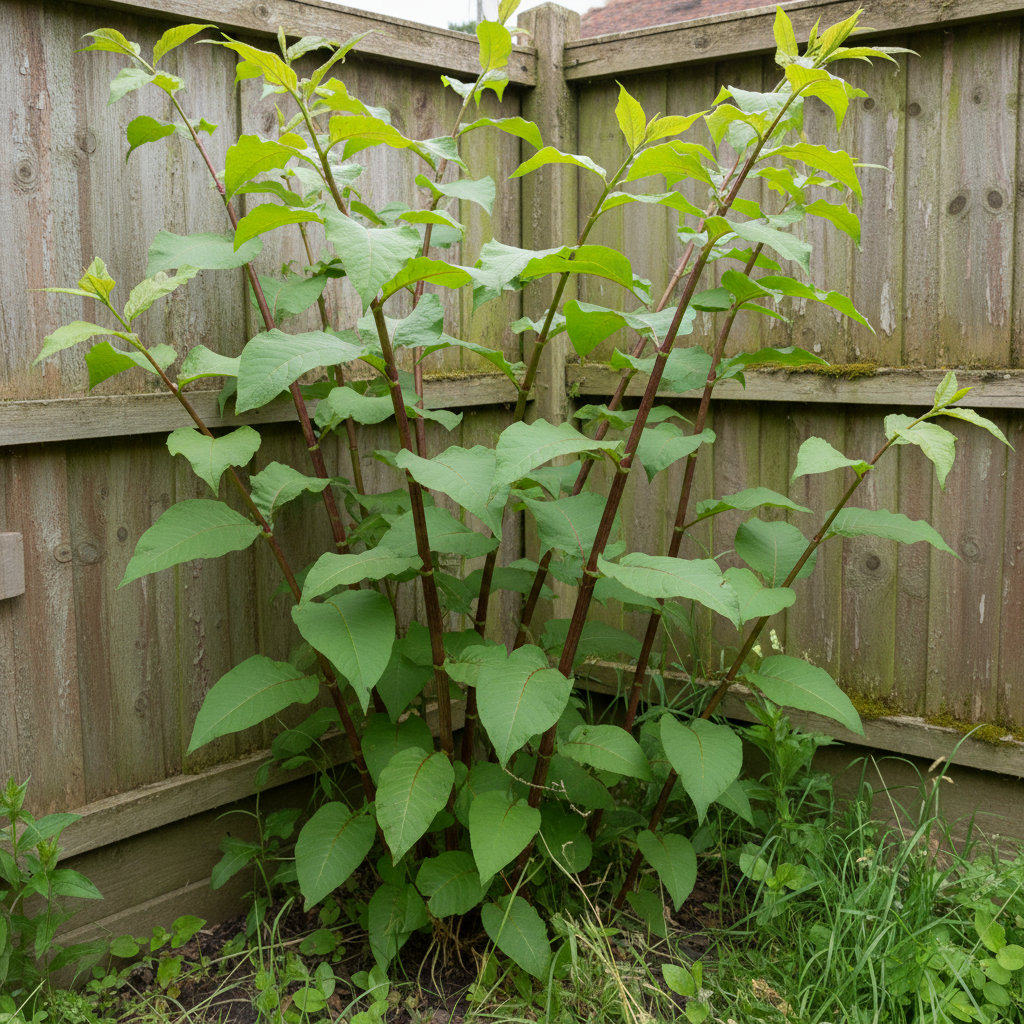
Japanese knotweed was a Victorian ornamental import. By the late 1800s it was being shared between estates and gardens across the country. It loves disturbed ground, which is why it thrives along railway cuttings, canal banks, dock land and post-war demolition sites. Liverpool has all four in abundance. The Leeds and Liverpool Canal carved a corridor of perfect knotweed habitat through Bootle, Vauxhall and Litherland. The railway lines through Mossley Hill, Allerton and Aigburth stitched a second corridor across south Liverpool. The Tranmere and Birkenhead docks did the same on the Wirral side.
Once it’s established, a piece of rhizome the size of a fingernail can start a new colony. That’s why fly-tipped soil, builders’ spoil, and even shared topsoil deliveries can land knotweed in gardens that have never had it before.
The Liverpool hotspots we see most
Bootle, Litherland and the canal corridor
Streets backing onto the Leeds and Liverpool canal between Stanley Dock and Bootle are the highest concentration we encounter. Old industrial fringe, decades of disturbed ground, established colonies that have leapfrogged into back gardens via fly-tipped soil and builders’ compounds. If you’re in L20, L21 or L4 and your garden backs onto the canal, walk the boundary in May and check.
Mossley Hill, Allerton and the railway
The L18 and L17 streets that border Network Rail land have established knotweed in some of the cuttings. It pushes into the gardens that adjoin the line. We’ve treated colonies in back gardens off Rose Lane, Garmoyle Road and parts of Aigburth Vale. If your fence backs onto a railway cutting and you spot it, document the date you found it, photograph everything, and contact the rail-side land manager as well as starting your own treatment.
Crosby and the former industrial fringe
Less prevalent than Bootle but well-established in pockets. Land that was former industrial use (rope works, gas works, scrapyards) tends to have residual stands. Streets between South Road and the rail line, and a few back gardens near the Hightown side, occasionally throw it up.
Wirral hotspots worth flagging
Tranmere, Birkenhead docks, and Wallasey along the old industrial coast all get knotweed enquiries every spring. New-build estates on former brownfield in Bromborough, Wirral Waters and parts of Saughall Massie occasionally inherit it from un-removed soil during construction.
How to identify Japanese knotweed (May to August)
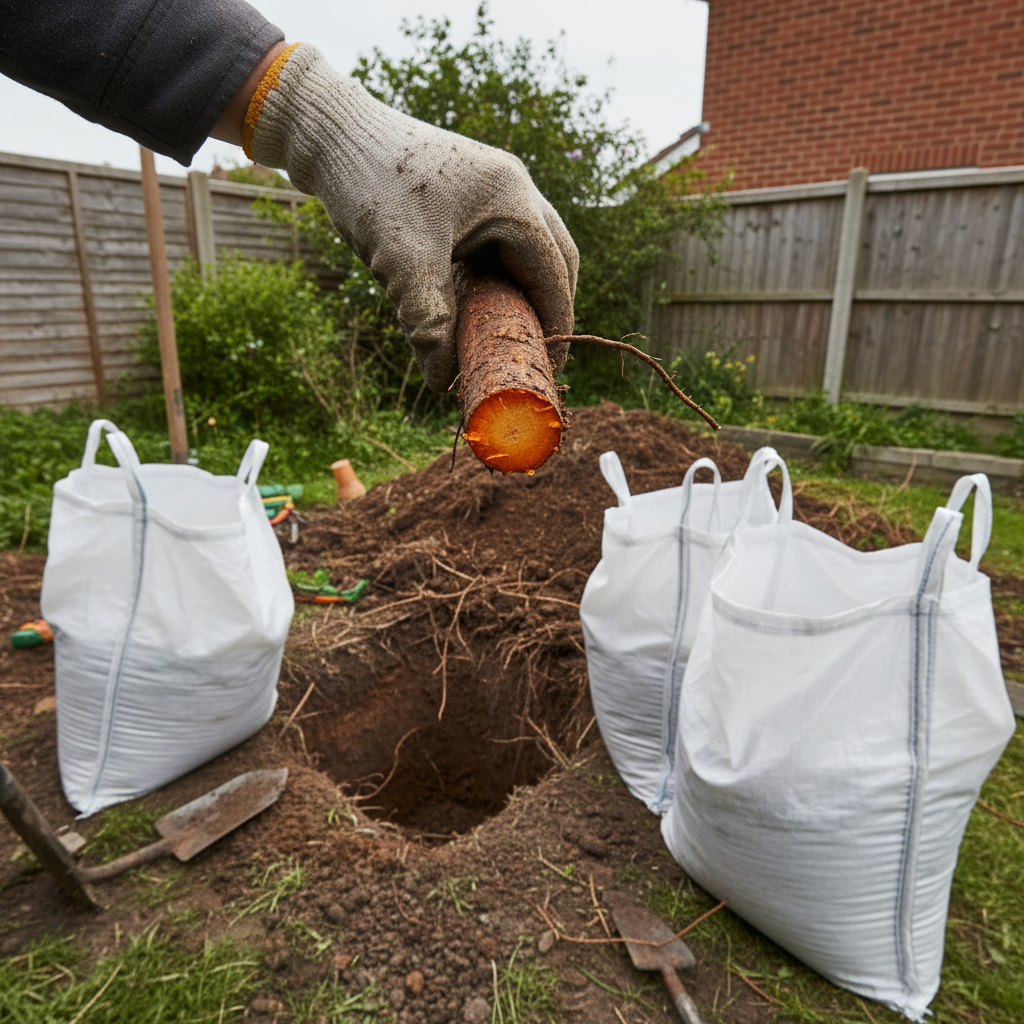
This is a textbook plant once you’ve seen one. The RHS guidance on Japanese knotweed covers identification in detail, but here’s what to look for in a Liverpool garden right now:
- Stems: hollow, bamboo-like, reddish-purple speckled, with conspicuous nodes (joints) every few inches. Up to 3 metres tall by summer
- Leaves: shovel or heart-shaped, 10 to 15cm long, alternating in a clear zigzag pattern down the stem. Smooth and glossy
- Spring shoots (April to early May): rounded pink or red buds at ground level, with reddish-purple soft shoots that grow up to 20cm a day
- Flowers (August to October): small creamy-white sprays
- Underground: brown rhizomes that snap with a clean crack and show orange flesh inside the brown skin
What it isn’t: bindweed (climbing twiner with white trumpet flowers), Russian vine (woody climber), bamboo (woody nodes but doesn’t have the zigzag leaves), or Himalayan honeysuckle (broader leaves, no orange rhizome). If in doubt, photograph and ask.
Free knotweed ID visit, no obligation
If you suspect knotweed, send us a photo and we’ll come and confirm in person, free of charge. If it’s confirmed, we co-ordinate licensed disposal of any cut material as part of our garden waste clearance work, and we’ll talk you through the realistic treatment options before you commit.
Why DIY removal almost always fails
The plant grows from rhizomes that can stretch 7 metres horizontally and 3 metres deep. A fragment the size of a fingernail can regenerate. Strimming it scatters fragments. Mowing it spreads the rhizome under the surface. Digging it without licensed disposal is, technically, an offence under the Environmental Protection Act because the soil itself becomes controlled waste.
Cuttings can’t go in your green bin. They can’t go to Old Swan or Otterspool tip. They can’t be composted at home. They have to go to a licensed landfill site that accepts controlled invasive plant waste, with a documented duty-of-care transfer note. If you’ve already strimmed or dug some out, bag it carefully in a heavy-duty rubble sack, label it, and don’t move it from the property until you’ve spoken to someone licensed.
The two real treatment options
Glyphosate programme (slower, cheaper)
A licensed contractor injects or sprays glyphosate into the leaves and stems across three to five growing seasons. Each year the visible growth gets weaker until the rhizome is exhausted. Cost ranges from £1,000 to £2,500 across the full programme depending on the size of the infestation. You can’t build over the area or sell the property as fully cleared until the programme finishes.
Excavation and licensed disposal (faster, more expensive)
The whole rhizome network is dug out, the contaminated soil is removed under licence, and the garden is backfilled with clean material. Cost typically £3,000 to £10,000+ for a domestic infestation. The advantage: it’s done in one visit, with paperwork that satisfies a buyer’s solicitor. The disadvantage: the cost, and the disruption to whatever was on top.
For most home sales, a glyphosate programme with a properly insured contractor and a 5 to 10 year guarantee is what mortgage lenders will accept. For new builds, extensions, and patios where you can’t wait three to five years, excavation is the only realistic answer.
Selling a house with knotweed: the legal bit
If you’re selling, the TA6 Property Information Form has a specific question about Japanese knotweed. Lying on it is misrepresentation and you can be sued by the buyer years later. The honest answer is: have it identified, get a treatment plan in place with a guarantee, disclose it on the form, and most mortgage lenders will accept the sale. Trying to hide it makes everything worse.
Buying a house? Walk the back fence in May or June and look. If you see anything that could be knotweed, raise it before you exchange. Treatment paid by the seller is far easier to negotiate than treatment paid by you after completion.
What our customers say
★★★★★
“Sam and the lads were fantastic. They were able to start work sooner than expected, made my vision become a reality, and were very professional. We can now enjoy our low maintenance garden.”
Hannah Doran • Google Review • 2024
Late spring is your easiest ID window
From mid-May through June, knotweed is unmistakable: bamboo-like reddish stems and zigzag leaves. By August it’s flowering and harder to ignore. By winter it dies back to brown canes that look harmless. If you’ve a hunch, get a free ID visit booked in over the next six weeks while it’s at its most distinctive.
Related services
Spotted something? Don’t touch it. Call us.
Send us a photo or book a free identification visit. If it’s not knotweed, we’ll tell you and you can stop worrying. If it is, we’ll talk you through the realistic options without the scaremongering you’ll get from a sales-led firm.
Free quote, no obligation. Fully insured. Google 4.5★.
Serving Bootle, Litherland, Mossley Hill, Allerton, Aigburth, Crosby, Tranmere, Birkenhead and the wider Liverpool city region.
Frequently Asked Questions
How do I identify Japanese knotweed?
Hollow, bamboo-like reddish-purple speckled stems with conspicuous nodes. Shovel-shaped leaves alternating in a zigzag pattern, 10 to 15cm long. Reddish shoots emerging from pink ground-level buds in spring. Brown rhizomes with orange flesh inside.
Where in Liverpool is Japanese knotweed most common?
Highest concentrations are along the Leeds and Liverpool canal corridor through Bootle, Litherland and Vauxhall, the Mossley Hill and Allerton railway cuttings, and pockets of former industrial land in Crosby and Tranmere. Any garden backing onto a canal, railway or former industrial site is worth checking.
Can I sell my house with Japanese knotweed?
Yes, with disclosure on the TA6 Property Information Form and a treatment plan in place, ideally with a 5 to 10 year guarantee. Most mortgage lenders accept the sale on those terms. Hiding it is misrepresentation and you can be sued by the buyer years later.
How much does Japanese knotweed removal cost?
A glyphosate treatment programme typically runs £1,000 to £2,500 across three to five seasons. Excavation and licensed disposal usually £3,000 to £10,000+ for a domestic infestation. Ignoring it costs more than either, in eventual treatment and reduced property value.
What kills Japanese knotweed permanently?
Either a properly applied glyphosate programme by a licensed contractor over three to five seasons, or excavation of the contaminated soil under licence. DIY weed killer rarely reaches the rhizome network and almost always fails. The plant grows back from a fragment the size of a fingernail.
Is it illegal to have knotweed in my garden?
Having it isn’t illegal. Letting it spread to neighbouring property can be: under the Anti-Social Behaviour, Crime and Policing Act 2014 a Community Protection Notice can be issued. Disposing of contaminated soil incorrectly is also an offence. The cuttings cannot go in your green bin or to a normal recycling centre.